New Directions for Empirical Research on Religion and Science
Editorial by Elaine Howard Ecklund and Josiah Taru

Advances in science (medical sciences, AI, and space exploration) and the ever-changing religious and spiritual landscape (the increase in the nones and the Spiritual but not Religious) continue to expand the terrain for understanding the relationship between religion and science. This calls for timely empirical research, in diverse cultural and religious contexts, to provide answers to both new and old questions.
Over 5.8 billion individuals identify as religious, accounting for nearly 88 percent of the global population. Many nonreligious people also describe themselves as having some form of spirituality (Ecklund 2021; Ecklund and Di Di 2018; Zurlo, Johnson, and Crossing 2025). Religion remains one of the most significant institutions in the world (Jurgensmeyer 2010, Prothero 2010). Religion shapes families and friendships (Edgell 2006, Olson 2019), influences law and politics (Bonikowski and DiMaggio 2016) and provides existential security to people on every continent and across different eras (Berger 1990; Ecklund 2021; Grillo 2011).
Science is similarly significant. Over the past two centuries, medical and nutritional advances have nearly doubled the average human lifespan; more so in some societies than others (Roser 2019). Among the Organization for Economic Cooperation and Development countries, the size of the science workforce in 2015 ranged between 6 and 23 million, depending on how it's defined (National Science Board 2018). However, more important than the size of the actual scientific workforce is the influence of science itself. Even as science is attacked in the US and globally, economically growing nations are working to expand their science and technology sectors. A study by the World Bank found that students who take more science courses tend to experience better economic outcomes—regardless of career path (Hanushek and Wößmann 2007).
Social Science studies show that religion and science are the leading global authorities that people rely on when making decisions about most aspects of their lives (Brooke and Numbers 2011; Ecklund 2021; Prothero 2010). People employ them to make sense of the world. As a result, the intersection of science and faith looms large in the global public imagination (Ecklund 2020; Taru and Ecklund 2025; Wagner and Briggs 2016). And one’s views on the relationship between religion and science have tangible social effects. Studies show that opinions on the relationship between religion and science can influence whether a parent encourages a child to take science classes, which in turn can affect whether the child pursues a career in science or technology (Ecklund and Scheitle 2016), meaning that such views are essential if a society hopes to produce more scientists. Views on the relationship between religion and science can influence how a scientist personally interprets the morality of certain scientific technologies (Ecklund et al. 2019). And in democratic societies, views on the relationship between science and religion – as seen recently in the U.S.— can even influence who an individual votes for and, consequently, the public financial support for scientific research.
For the past 20 years, I (sociologist Elaine Howard Ecklund) have been studying what scientists think about religion and what religious people think about science. As part of that work, our team has surveyed nearly 40,000 scientists across the world and completed over a thousand in-depth interviews in their offices and labs, discussing their views on faith. We’ve also surveyed more than 30,000 members of the American public—including Christians, Jews, and Muslims from various traditions, as well as those of other or no religious backgrounds—about their views on science.
Sociology’s Unique Contribution
Sociologists, and social scientists more broadly, bring something unique to understanding the relationship between religion and science. We are interested in group behaviors. Sociologists, in particular, are interested in how groups influence individuals and how groups can bring about change within society. One way we study this is by listening to people’s life stories and analyzing how those stories reflect the groups individuals are part of. Sociological data also allows us to move beyond the loud, combative voices that drive public debate and gain a more nuanced and accurate picture of what people think, value, and believe. Sociology does not have the same tools as philosophy or theology; it cannot tell us how to live. But suppose we know how we want our communities, religious organizations, or laboratories to differ. In that case, sociology can help us understand group cultures and engage in practices that help us effect change.
When examining science and religion, sociology provides a key insight. Science and religion are not just sets of ideas or thought systems—although they are indeed these things. Science and religion are communities of people—communities like “laboratories,” “churches,” “universities,” and “denominations.” And some people are part of both communities. If we are going to continue to advance research on the interface between religion and science, we need to start by listening better to several key voices.
Voices of Minority Christians
Studies of the relationship between religion and science have often been primarily examinations of Christianity and science. But even within studies of Christianity and science, voices from racially and ethnically marginalized communities are often missing. We often fail to acknowledge how views of science and moral authority are shaped by race, class, and gender. More recent work is starting to acknowledge this (Bolger et al. 2024; Bolger and Ecklund 2018; Tinsley et al. 2019; Wilde and Glassman 2016).
For example, as Noy and O’Brien (2018, 54) note, “science has been traditionally organized by white men,” a reality that shapes how individuals from other social locations understand the moral threat posed by scientists themselves. Scientists and the practice of science reflect cultural beliefs, values, and ideas of their time. Some of these ideas have adverse effects on certain categories of society while benefiting others. We have found such perspectives articulated by Black and Latino Protestant Christians in our work. For example, one Latino man, when explaining the persistence of racial inequality in STEM occupations, told us that Latino children “look at (science) as more of an Anglo field," before going on to note that “they might be discriminated against, they might be looked down on rather than looking equal in that manner.”
Ample research suggests that science and scientists do have a highly salient moral legacy in many racial and ethnic minority communities. African American Protestants in the United States might have even greater concern than white Christians about the moral threat of scientists. Not only have scientists historically promulgated views of the biological inferiority of African Americans, but they have also subjected Black Americans to considerable suffering in the name of scientific progress (Fields and Fields 2014; Morning 2011). One prominent example of such scientific misconduct is the now-infamous Tuskegee Study, in which treatment was withheld from poor Black men in Alabama suffering from syphilis. The study was conducted from 1932 until 1972, but an official government apology did not come until 1997 (Centers for Disease Control and Prevention 2015). Even though most did not have personal experiences with the experiments, our Black American respondents were well aware of these events (see Bolger, Tinsley, and Ecklund 2018; Ecklund and Scheitle 2017; Tinsley, Prickett, and Ecklund 2018).
For example, one African American accountant that we interviewed for a study noted:
“African Americans have been tested for syphilis and all that. Still, I think the kids today don't even know about all that… but the sad thing is that usually in culture these things repeat themselves even though you don't understand why …I think with stuff going on in like Flint, Michigan, and some of the Black neighborhoods that are closer to waste… So they really don’t want to deal with science.”
This 34-year-old respondent was born well after the Tuskegee trials had concluded. Her awareness of the event, however, spurs skepticism about the sources behind current health crises facing predominantly Black communities, most notably the contamination of drinking water in cities like Flint, Michigan. Her words reflect what we have described as the Black church’s potential to serve as a “moral community of memory” regarding science and medicine (Tinsley, Prickett, and Ecklund 2019).
Our Latino respondents highlighted similar themes. For instance, one Latino real estate agent explained that “in the past, (science has) been very hurtful. If you look at evolution and you look at the studies of Darwin and what he wrote, he’s even said that black people are not as smart as white people.” Indeed, while the moral concerns about science among racial or ethnic minority Christians might be different than those facing white Christians, they are no less salient.
And recent research highlights the critical implications of this fact. First, numerous studies document the prevalence and extent of medical mistrust among African Americans (Centers for Disease Control 2015; Corbie-Smith et al. 1999; Kennedy, Mathis, and Woods 2007). Indeed, health and well-being often are the main ways in which science—broadly understood—interfaces with the lives of Black Christians. Research also suggests that Black Americans see scientists as biased (Tinsley et al. 2019), a concern that often extends to science educators (Bolger and Ecklund 2017). This should not be surprising; Noy and O’Brien (2018, 40) argue that “the collective memory of gendered experiences with racism vis-à-vis science and religion contribute to group-specific views of these two sources of knowledge and authority.” And this is true for many in African nations as well. Historical data details scientist Robert Koch’s unethical treatment of African people during his experiments on sleeping sickness in the German colonies of Africa. His research, conducted in the early 20th century, involved using African patients for dangerous human experiments and isolating them in “concentration camps.”
[1]
Voices from Multiple Religious Traditions
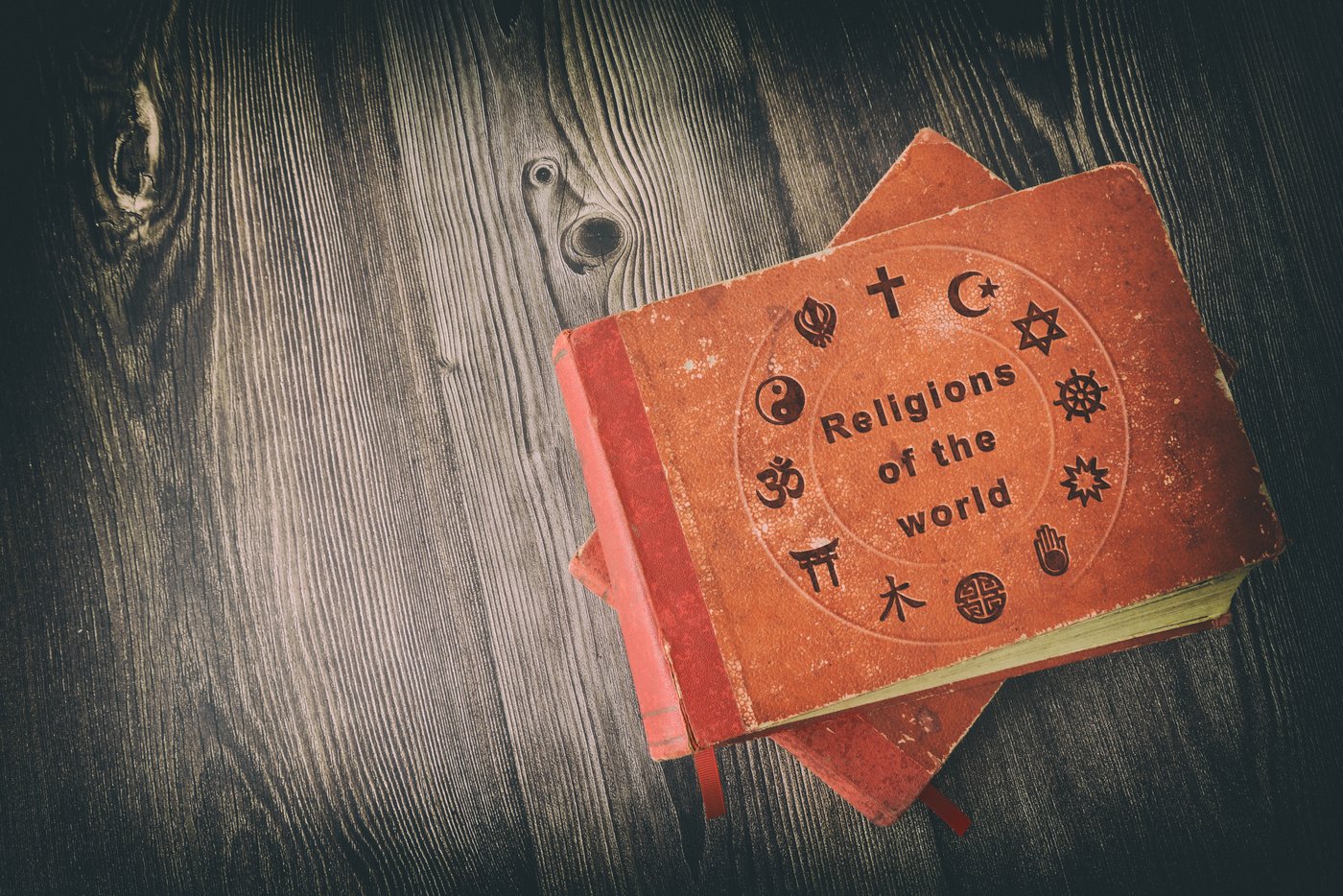
At least in the US, those outside the Christian traditions are not represented in large numbers in publicly accessible US survey research. This does not mean, however, that concerns about morality are any less salient among Muslims, Jews, and Hindus, for example. In addition, by limiting analysis to dominant religious groups, we risk overlooking critical ways in which increasing religious diversity in the US (and what are often majority traditions outside the US, like Islam) may complicate the relationship between science and religion, and how new and different moral concerns among religious minorities may contribute to broader public debates.
This trend is changing nationally (Wuthnow 2005) and is certainly not true globally. Take, for example, the national and global growth of the Muslim community. Muslims comprise only 1.1 percent of the US population, increasing from 2.35 million to 3.45 million between 2007 and 2017. In addition, projections indicate that by 2040, Muslims will replace Jews as the second-largest religious group in the nation, and by 2050, the percentage of Muslims will double to 2.1 percent of the total US population (Pew Research Center 2017). Further, recent estimates suggest that there are approximately 2 billion Muslims globally, making Islam the second largest religion in the world after Christianity (Zurlo Johnson and Crossing 2025). Such religious diversity further underscores the need for more research on the religion-science debate in the US and globally (Ecklund et al. 2016).
Debates about evolution are being increasingly observed and examined across the Muslim world (Ecklund et al. 2019; Hameed 2008), with a significant percentage of residents in Muslim-majority countries such as Turkey, Indonesia, Pakistan, Malaysia, and Egypt rejecting Darwinian evolution. However, this reticence to embrace evolution largely derives from the social and cultural threat many perceive the theory presents to Islam via its association with atheism, rather than theological differences that emerge from the Qur’an. In addition, moral attitudes around in-vitro fertilization (IVF) among Sunni and Shi’a Muslims across different global regions exemplify the salience of moral concerns, but different moral concerns than those expressed by conservative Protestants in the US (Inhorn 2006). The nature of these moral debates may vary significantly by faith tradition and regional context. In addition, examining conflict between religion and science outside of the US can afford more insight into whether the moral conflict that Evans theorizes is unique to the US or extends to other parts of the world. Non-Western contexts (such as India) (Gosling 2007) have experienced very different trajectories of scientific development because of their advancement outside of Enlightenment-era thinking.
That said, in the US, work suggests that some Muslims and Jews also perceive conflict between religion and science (Vaidyanathan et al. 2016). However, many religious minorities reject notions of conflict and perceive the religion-science debate that persists in the US as distant from their own spiritual beliefs and expressions.
This notion of synergy or coexistence between Islam and science was echoed by a Muslim religion professor, who linked this absence of conflict directly with the Qur'an. As he explained:
The Qur'an was not a written text… It was an inspired speech, okay? So… because of that, that inspired nature of the text, it's really not very detailed and substantial, you know, as a prose will be… The Qur'an is open to many interpretations. So if you feel that there is a conflict, we immediately interpret the text and say that we will not take it literally, eliminating the conflict between the two [religion and science].
The openness that this sacred text afforded to allow “many interpretations” facilitated distance from conflict. This notion of "flexibility" was also shared by some Jewish respondents. For example, as a Jewish geology student [2] explained:
[W]hen you get to the core of science and religion, there isn't much of a conflict. However, it does depend on what religion… Christianity is basically a cheap knockoff of Judaism… The vast majority of Christian philosophy is on taking what it says literally… [T] The Torah has flexibility on a lot of different things, such as being able to say and find leniencies for certain things under certain circumstances and to accept different interpretations of how the world works.
Here, the respondent juxtaposes Judaism and Christianity by noting the latter’s propensity toward biblical literalism, thus suggesting that conflict with science is related more to interpretation than the substance of the religious text itself. Some research (Chan and Ecklund 2016) indicates that literalism and “inflexibility” in interpretation of the Bible might not be as common as the respondent perceives; however, Christians across traditions rely on a number of boundary-making strategies to make sense of scientific claims in light of Biblical authority.
Meanwhile, members of religious minority traditions may ascribe to certain attitudes about science (i.e. not perceiving conflict) as a source of boundary-making to differentiate from more mainstream debates around science and religion (Ecklund, Park, and Sorrell 2011). As Vaidyanathan et al. (2016, 492) explain “despite their theological differences, adherents of Judaism and Islam clearly shared an expressed desire to distance themselves from the conflict narrative in this study by distancing themselves from anti-science views they perceived as typical of mainstream conservative Christians.” In this way, “science is an area where those outside Christian traditions draw out their differences with Christianity.” Thus, we argue that this boundary-work represents a kind of moral stance about the religion-science debate in the US, such that members of some minority religious traditions – for whom this debate may be experienced differently from a theological standpoint – still interface with this moral conflict in the public sphere and feel compelled to respond to this tension by distancing themselves from it. Taken together, these findings offer insights into how everyday Americans from different non-Christian traditions perceive and negotiate moral conflict around religion and science, which has implications for our understanding of the conditions that shape this moral conflict in the US more broadly.
Voices of Those Around the Globe
In most countries, religion influences the transmission and public acceptance of science. In the United States, we see debates between science and religion over issues such as the teaching of evolution in public schools, climate change, and human embryonic stem cell research. Battles over how evolution is taught have also emerged in Asia and Africa, and there has been public controversy in India over the proposed introduction of astrology into the science curriculum. The European Union has witnessed a resurgence in religious opposition to scientific research, and public leaders in the United Kingdom worry that a recent influx of Muslim immigrants may pose unique religiously based challenges to science. Debates about the proper relationship between science and religion are under the glare of a global spotlight—and scientists are often at the center of these debates (Ecklund et al. 2019). [3]
Before we conducted our research, it was unknown, for example, how the religious character of a nation—such as whether or not the population is highly religious, the presence or absence of state religions, or varying levels of secularity—influences the country’s scientific enterprise. [4] There was also little knowledge of the factors that influence how scientists think about religion or how their religious views are changing the character of the sciences. Without such analyses, we can only claim that scientists are relatively nonreligious and assume that science made them so. We cannot accurately understand the social variables that influence religiosity and how these differ among scientific disciplines and national contexts. We have conducted the largest study to date about how scientists who live in different national contexts understand religion and how it shapes their scientific work, but more cross-national research is needed. Different national contexts present new phenomena for understanding the interactions between science and religion. For example, medical science and religious discourses around rites of passage and the care of infants. Furthermore, cross-national understandings go beyond “world religions” by introducing indigenous religions that are often overlooked in the analysis of science and religion.
Conclusions
For policymakers and the general public, our research has revealed how national ideologies and policies related to religion affect scientists’ work, and how this, in turn, might affect the way science is presented and implemented in their nations. Our research has also increased understanding of how the personal religious views of scientists can shape their practice, dissemination, and interpretation of science and how different religious groups might better relate to science and scientists. In sum, understanding the complex interplay between religion and science requires listening to diverse voices across communities, traditions, nations as well as staying attuned to new developments in science and the evolving religious landscapes. By moving beyond simplistic conflict narratives, we can better appreciate how faith and science coexist, shape identities, and influence societies worldwide.
Elaine Howard Ecklund
Josiah Taru
Publiziert im Dezember 2025
Elaine Howard Ecklund is Herbert S. Autrey Chair in Social Sciences, Professor of Sociology and Director of the Boniuk Institute for the Study and Advancement of Religious Tolerance.
Josiah Taru is a postdoctoral fellow in the Boniuk Institute at Rice University.
References
Bolger, Daniel, and Elaine Howard Ecklund. 2018. “Whose Authority? Perceptions of Science Education in Black and Latino Churches.” Review of Religious Research 60(1): 49-70.
Bolger, Daniel, Cleve Tinsley IV, and Elaine Howard Ecklund. 2018. “Heaven and Health: Pastoral Perspectives on Faith and Medicine.” Review of Religious Research 60(3): 389–402.
Bolger, Daniel, Andrea. K. Henderson, Bianca Mabute-Louie, and Elaine Howard Ecklund. 2024. “The Intersections among Race, Religion, and Science in Explaining Mental Health Conditions.” Socius, 10. doi.org/10.1177/23780231231225543
Centers for Disease Control. 2015. “U.S. Public Health Service Syphilis Study at Tuskegee." www.cdc.gov/tuskegee/index.html. Accessed May 20, 2016.
Chan, Esther, and Elaine Howard Ecklund. 2016. “Narrating and Navigating Authorities: Evangelical and Mainline Protestant Interpretations of the Bible and Science.” Journal for the Scientific Study of Religion 55(1): 54-69.
Corbie-Smith, Giselle, Stephen B. Thomas, Mark V. Williams, and Sandra Moody-Ayres. 1999. Attitudes and Beliefs of African Americans Toward Participation in Medical Research. Journal of General Internal Medicine 14(9): 537-46.
Drees, Willem B. 2010. Religion and Science in Context: A Guide to the Debates. New York: Routledge.
Durkheim, Emile. 1995 [1912]. The Elementary Forms of Religious Life, translated by Karen E. Fields. New York: Free Press.
Ecklund, Elaine Howard. 2005. “‘Us’ and ‘Them:’ The Role of Religion in Mediating and Challenging the Model Minority and Other Civic Boundaries.” Ethnic and Racial Studies 28(1): 132-50.
Ecklund, Elaine Howard. 2006. Korean American Evangelicals: New Models for Civic Life. New York: Oxford University Press.
Ecklund, Elaine Howard. 2010. Science Vs. Religion: What Scientists Really Think. New York: Oxford University Press.
Elaine Howard Ecklund. 2021. “Science and Religion in (Global) Public Life: A Sociological Perspective,” Journal of the American Academy of Religion, 89(2): 672–700 doi.org/10.1093/jaarel/lfab046
Ecklund, Elaine Howard, Jerry Z. Park, and Katherine L. Sorrell. 2011. “Scientists Negotiate Boundaries Between Religion and Science,” Journal for the Scientific Study of Religion, 50(3):552-569.
Ecklund, Elaine Howard, David R. Johnson, Christopher P. Scheitle, Kirstin R.W. Matthews, and Steven W. Lewis. 2016. “Religion among Scientists in International Context: A New Study of Scientists in Eight Regions.” Socius 2:1-9.
Ecklund, Elaine Howard, David R. Johnson, Brandon Vaidyanathan, Kirstin R.W. Matthews, Steven W. Lewis, Robert A. Thomson Jr., and Di Di. 2019. Secularity and Science: What Scientists Around the World Really Think About Religion. New York: Oxford University Press.
Ecklund, Elaine Howard, and Jerry Park. 2009. “Conflict Between Religion and Science Among Academic Scientists.” Journal for the Scientific Study of Religion 48(2):276-92.
Ecklund, Elaine Howard, and Christopher P. Scheitle. 2017. Religion Vs. Science: What Religious People Really Think. New York: Oxford University Press.
Evans, John H. 2018. Morals Not Knowledge: Recasting the Contemporary US Conflict Between Religion and Science. Oakland, CA: University of California Press.
Evans, Michael S. 2016. Seeking Good Debate: Religion, Science, and Conflict in American Public Life. Berkeley, CA: University of California Press.
Fields, Karen E., and Barbara J. Fields. 2014. Racecraft: The Soul of Inequality in American Life. London: Verso Books.
Gosling, David L. 2007. Science and the Indian Tradition: When Einstein Met Tagore. New York: Routledge.
Guhin, Jeffrey. 2016. “Why Worry about Evolution? Boundaries, Practices, and Moral Salience in Sunni and Evangelical High Schools.” Sociological Theory 34(2): 151-74.
Hameed, Salman. 2008. “Bracing for Islamic Creationism.” Science 322(5908):1637-38.
Hill, Jonathan P. 2014. “Rejecting Evolution: The Role of Religion, Education, and Social Networks.” Journal for the Scientific Study of Religion 53(3): 575-94.
Inhorn, Marcia C. 2006. “Making Muslim Babies: IVF and Gamete Donation in Sunni Versus Shi’a Islam.” Culture, Medicine and Psychiatry 30: 427-50.
Johnson, David, Elaine Howard Ecklund, Di Di, and Kirstin Matthews. 2018. “Responding to Richard: Celebrity and (Mis)representation of Science,” Public Understanding of Science 27(5): 535-49.
Kennedy, Bernice R., Christopher C. Mathis, and Angela K. Woods. 2007. African Americans and Their Distrust of the Health Care System: Healthcare for Diverse Populations. Journal of Cultural Diversity 14(2): 56-60.
Korver-Glenn, Elizabeth, Esther Chan, and Elaine Howard Ecklund. 2015. “Perceptions of Science Education Among African American and White Evangelicals: A Texas Case Study.” Review of Religious Research 57(1): 131-48.
Morning, Ann. 2011. The Nature of Race: How Scientists Think and Teach about Human Difference. Berkeley, CA: University of California Press.
Noy, Shiri, and Timothy L. O’Brien. 2018. “An Intersectional Analysis of Perspectives on Science and Religion in the United States.” The Sociological Quarterly 59(1): 40-61.
Pew Research Center. 2011. “U.S. Muslims Concerned about their Place in Society but Continue to Believe in the American Dream.” http://www.pewforum.org/2011/01/27/the-future-of-the-global-muslim-population/.
Pew Research Center. 2017. “The Future of the Global Muslim Population: Projections for 2010-2030.” http://www.pewforum.org/2017/07/26/demographic-portrait-of-muslim-americans/.
Taru, Josiah., & Elaine Howard. (2025). Science and Religion in the Context of a Good Death. Review of Religious Research, doi.org/10.1177/0034673X251357293.
Tinsley IV, Cleve, Pamela J. Prickett, and Elaine Howard Ecklund. 2019. “How African American Protestants Frame Science.” Du Bois Review. doi.org/10.1017/S1742058X18000309.
Vaidyanathan, Brandon, David R. Johnson, Pamela J. Prickett, and Elaine Howard Ecklund. 2016. “Rejecting the Conflict Narrative: American Jewish and Muslim Views on Science and Religion.” Social Compass 63(4): 478-96.
Wilde, Melissa, and Lindsay Glassman. 2016. “How Complex Religion Can Improve Our Understanding of American Politics.” Annual Review of Sociology 42: 407-25.
Wuthnow, Robert. 2005. America and the Challenges of Religious Diversity. Princeton, NJ: Princeton University Press.
Zurlo, Gina A, Todd M. Johnson, and Peter F. Crossing. 2025. “World Christianity 2025: Regional Perspectives.” International Bulletin of Mission Research 49 (1): 62-74.
[2] RUS_Low-Mid SES Orthodox Jewish Synagogue, conducted October 20, 2013.
[3] For a detailed historical analysis of science and religion around the globe, see Brooke, John Hedley, and Ronald L. Numbers, eds. 2011. Science and Religion around the World. New York: Oxford University Press.
[4] Berger, Peter L. 2014. The Many Altars of Modernity: Toward a Paradigm for Religion in a Pluralist Age. Berlin: Walter de Gruyter, Inc.
Picture Credits
- Qualitative research methods and society data research outline hands concept. Scientific community analysis gathering non-numerical and sociological information for deep analytics #924037656 © Adobe Stocks, von vector illustration
- Abstract artistic christian religious modern background in bright colors, with crosses #924037656 © Adobe Stocks, von t0m15
- Books of the study of world religions with religious symbols #492094125 © Adobe Stocks, von Davizro Photography